Strategic Portfolio Management
Implement strategies, maximize delivery reliability. Get a complete overview of not just your strategies and initiatives, but also your resource utilization.
Trusted by leading organizations





How Does Strategic Portfolio Management Work?
We have developed a demand management system that strengthens cooperation between business and IT. Whether agile, classic, or hybrid — you have the flexibility to choose the delivery model that best suits your needs.
Always maintain an overview of the most important KPIs on costs and capacities. Get specific recommendations to avoid waste and maximize delivery reliability.

Recognized by leading industry analysts
Bee360 positioned as a Niche Player in the Gartner Magic Quadrant for Enterprise Agile Planning Tools 2022, recognized for its comprehensive perspectives on IT strategy, demand management, and portfolio execution.
Read moreBee360 featured in The Forrester Wave™: Strategic Portfolio Management Tools, Q2 2024, recognized for its comprehensive SPM capabilities and innovation.
Access the reportBee360 positioned as Technology Leader in the 2025 SPARK Matrix™ for Strategic Portfolio Management, excelling in technological excellence and customer impact.
Access the analysisClosed-Loop Portfolio Management
From strategy to execution and back
Strategy Definition & Allocation
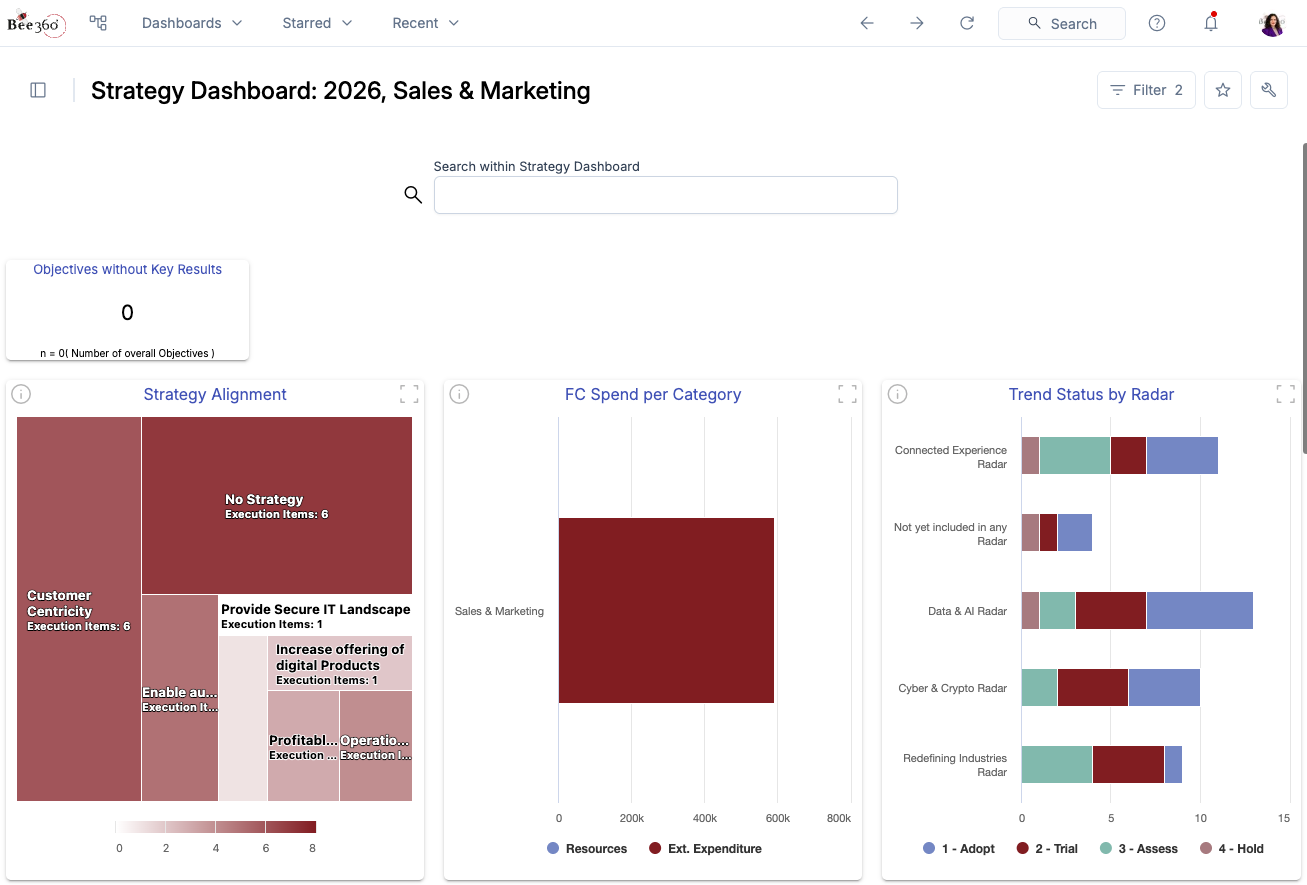
Define strategies and review strategic alignment together with your portfolio categories. Break strategies down into initiatives or connect OKRs. Measure what you spend per strategy and category, and review strategic execution. Review upcoming requirements to estimate future spending.
Capacity Management
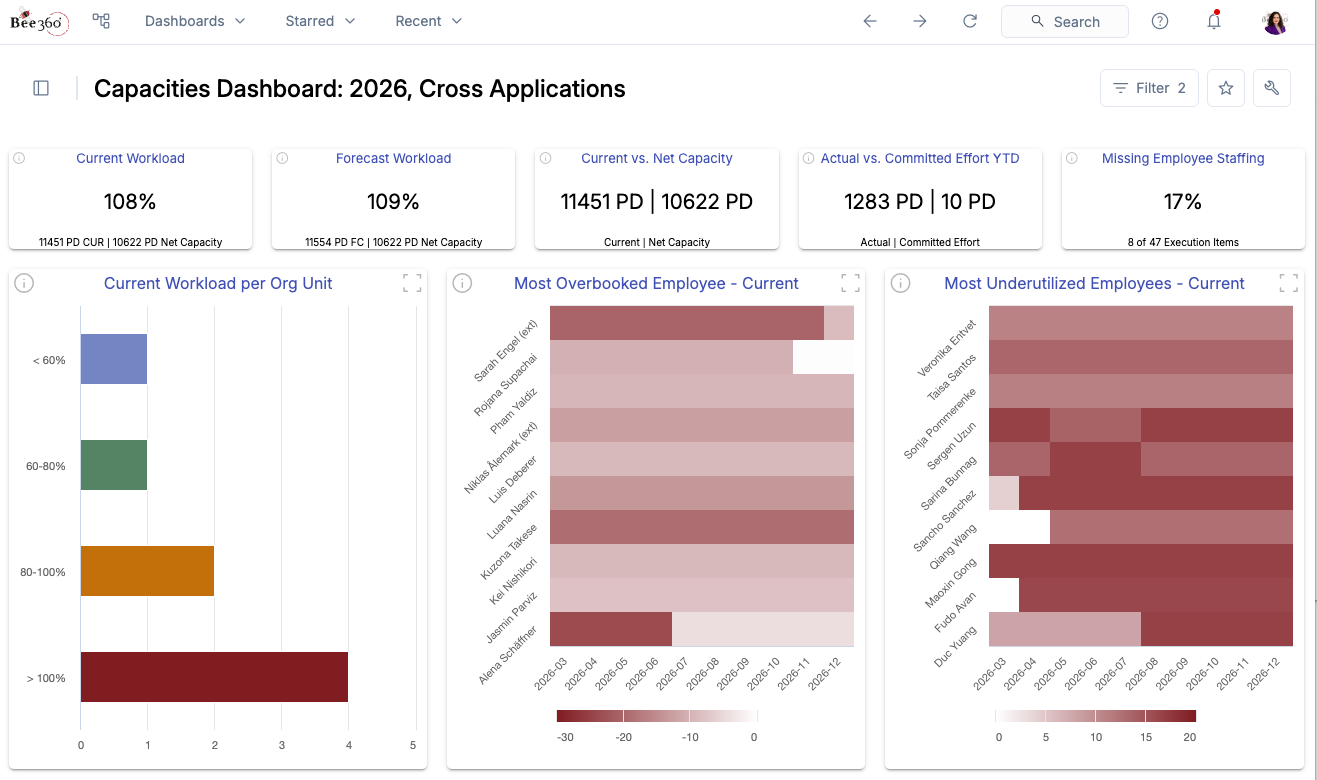
Compare planned workload with your total capacity and with current workload consumed by your workflows. Identify capacity constraints or underutilization of individual organizational units. Liaise with Recruiting and review upcoming HR changes to meet requirements.
Demand Management
Get a comprehensive view of approvals, long-term program implementation, goal alignment, schedule and budget variances, and allocation of your innovation budget. Manage innovation and operational budgets and adjust your portfolio accordingly.
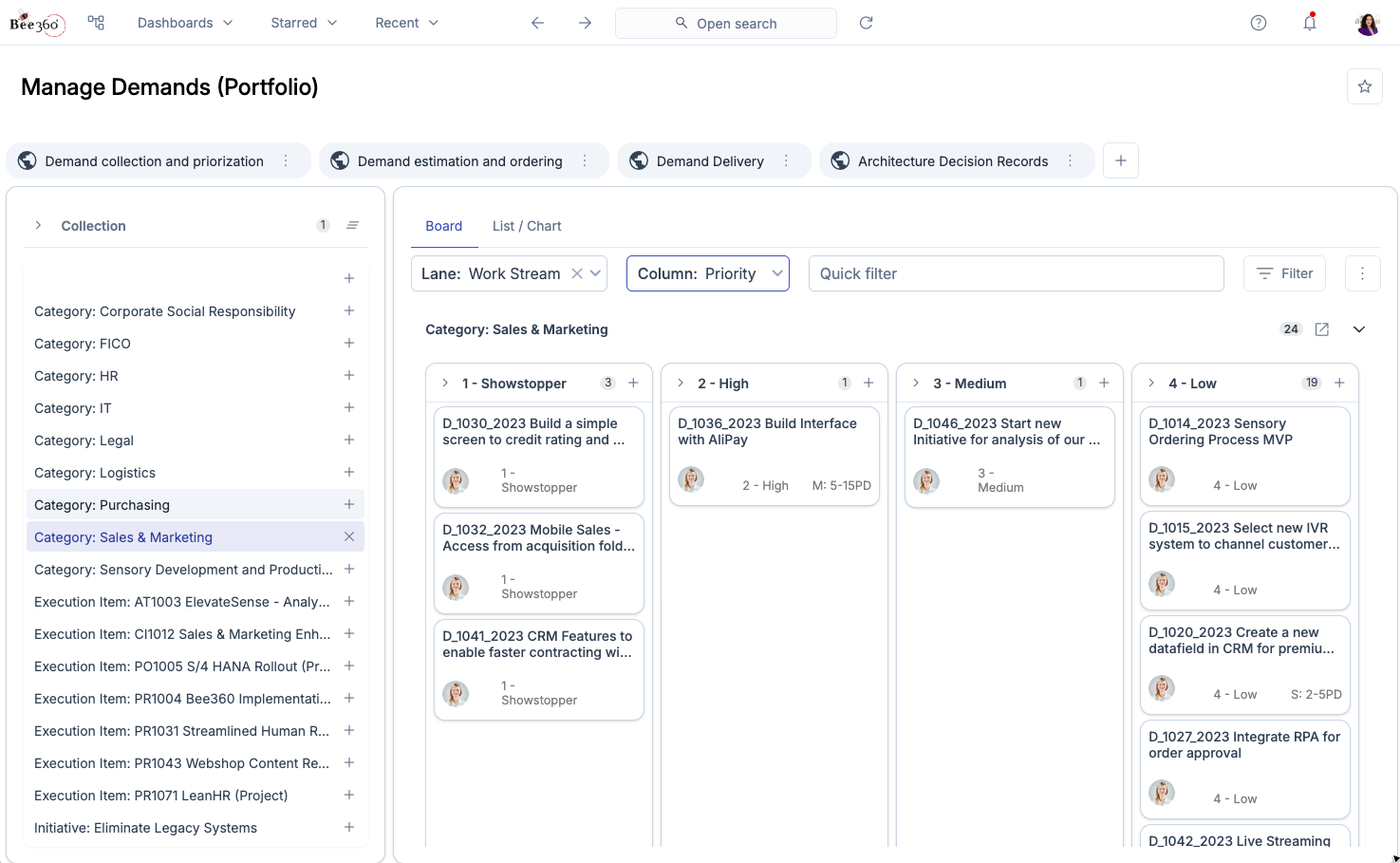
Agile Portfolio Management
Manage your applications with all supporting services. Stay informed about all relevant application changes throughout the project lifecycle. Verify the financial impact of your applications in run and change.
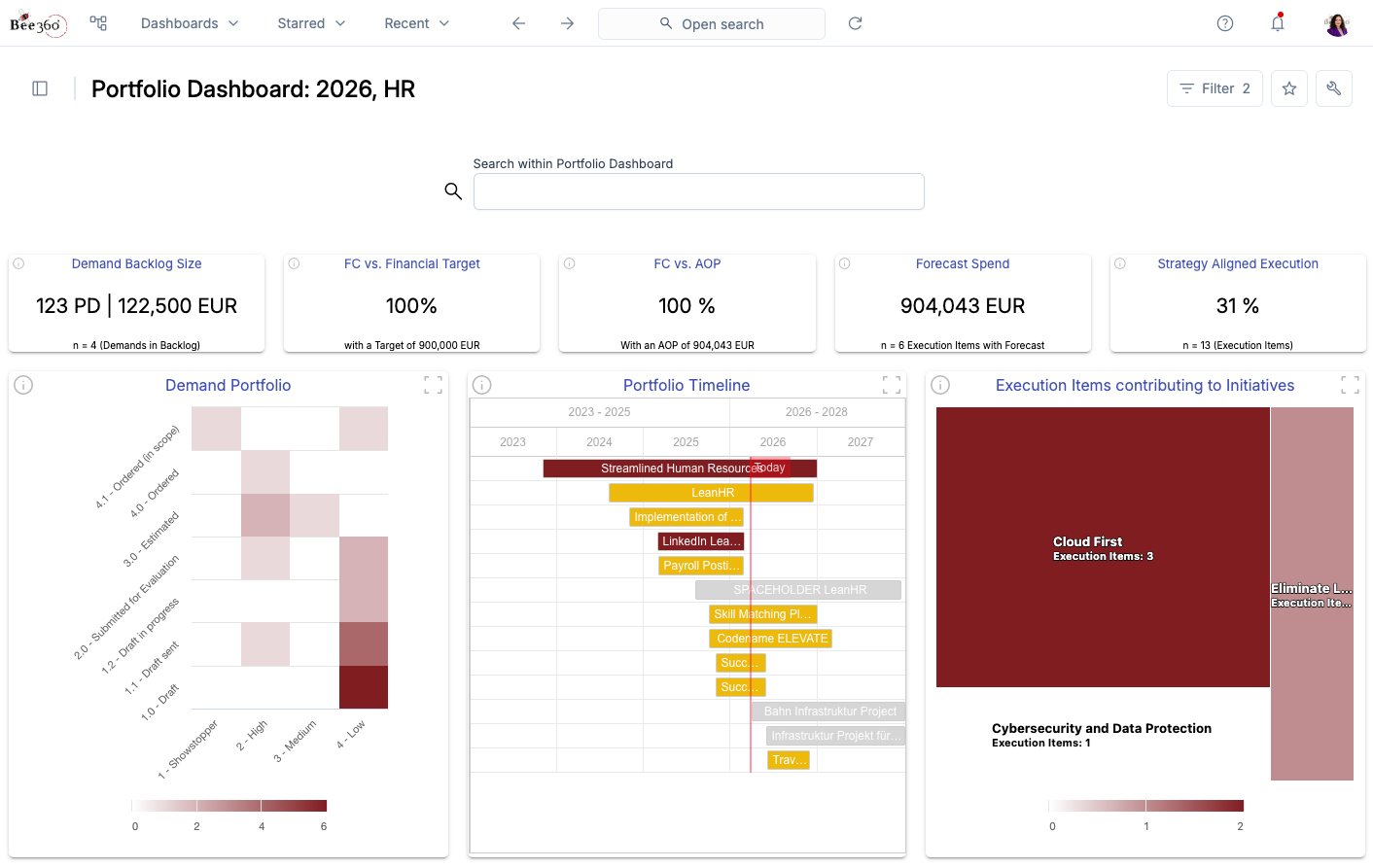
Dynamic Financing & Investment Modeling
Manage your financial objectives and organize budget allocation. Review the impact of changes compared to AOP and make strategic, portfolio, and individual budget adjustments. Communicate investment ratios and review execution at all levels.
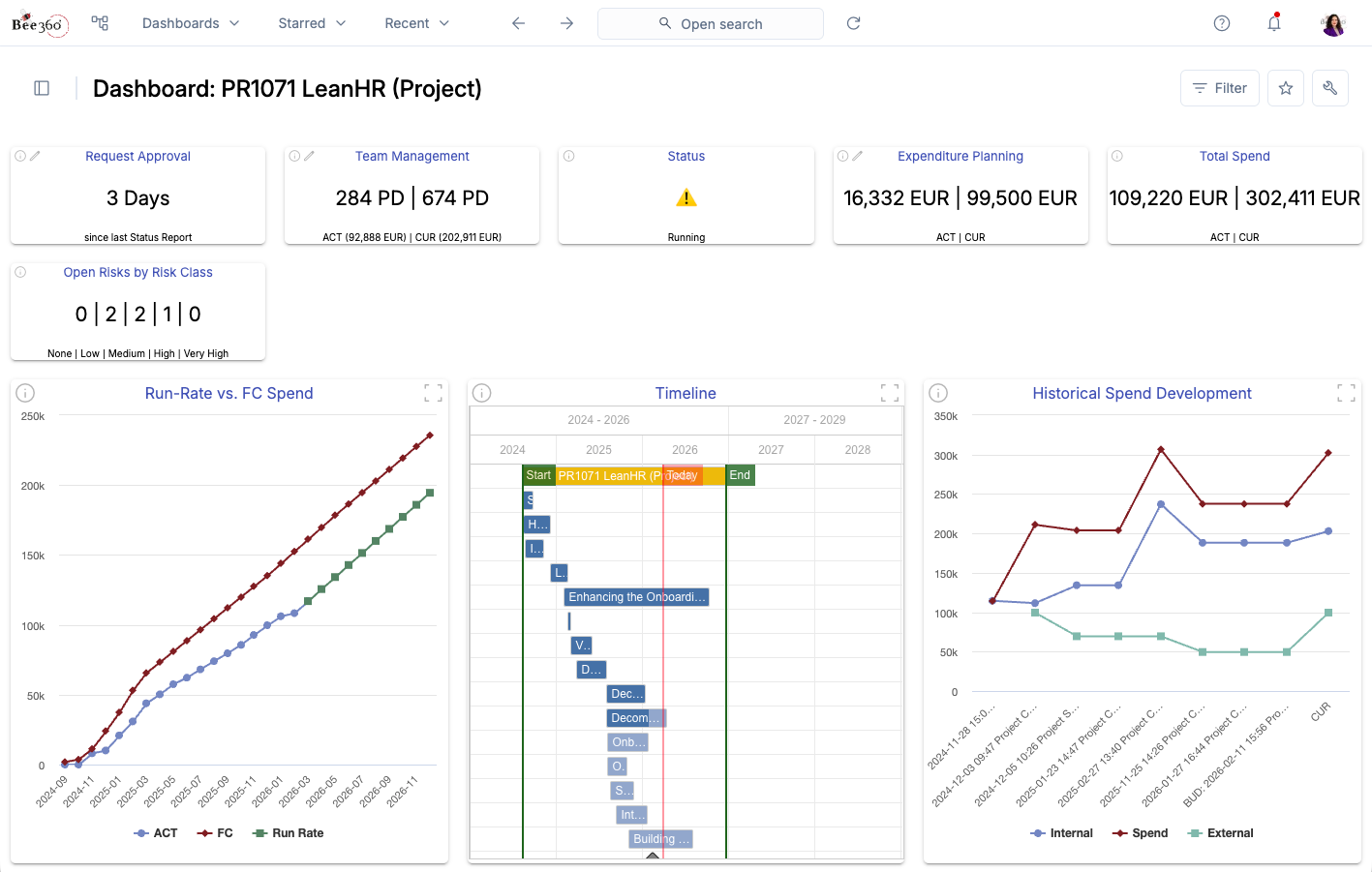
Application Management
Manage your value streams, associated processes, products, and agile teams. Define approval workflows for each product matching product maturity and required degrees of freedom. Coordinate by skills, roles, and release roadmaps.
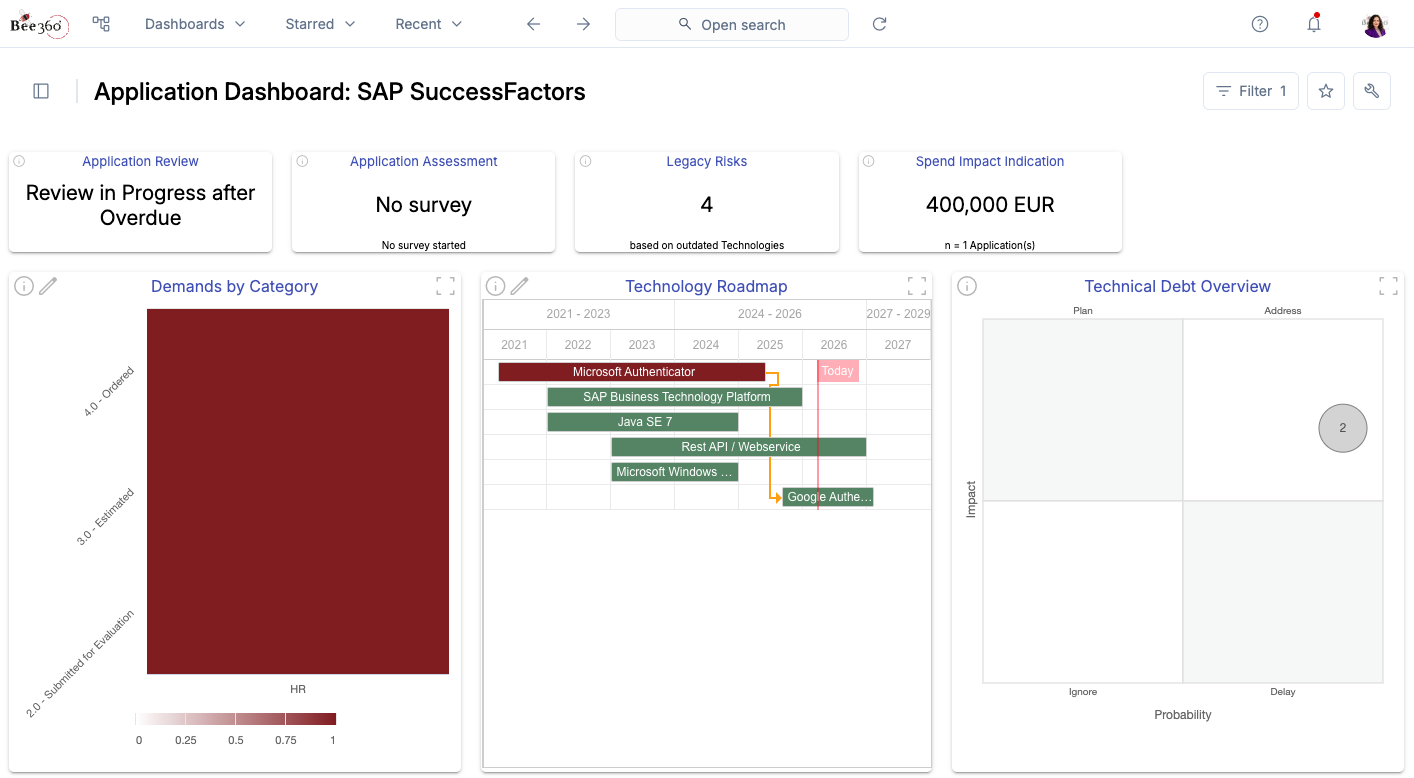
Integration
Create a reliable source of information with Bee360 as your single source of truth. Integrate Bee360 seamlessly with tools like Jira, GitLab, Azure DevOps, and SAP to benefit from streamlined workflows and avoid redundant work steps.
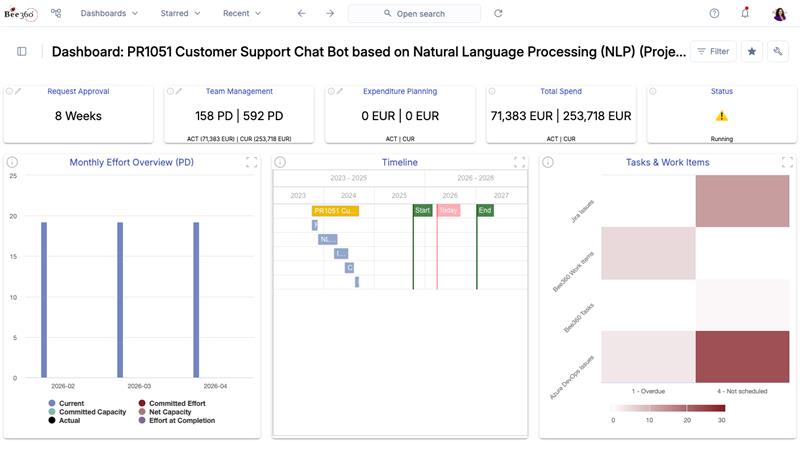
Integrate All Relevant Units into Your Architecture
Build transparency, achieve alignment, and enable control
Build Transparency
- Single source of truth for enterprise, divisional, and functional strategies
- View strategy breakdown across portfolios, programs, initiatives, and products
- Close the gap between business and IT with a shared product portfolio view
- Understand financial, capacity, and technology requirements
Achieve Alignment
- Common decision-making basis for all governance bodies
- Identify synergies and eliminate redundancies during implementation
- Enable top-down and bottom-up customization
- Collaborate on outcome-oriented portfolio and product roadmaps
Enable Control
- Manage based on strategic alignment, portfolio simulations, and roadmaps
- Prioritize strategy implementation based on investments and capacities
- Empower teams with visibility into strategic priorities and outcomes
- Integrate with operational tools and measure progress continuously
What Our Customers Say


Relevant Content on Strategic Portfolio Management
In-depth resources to help you master SPM
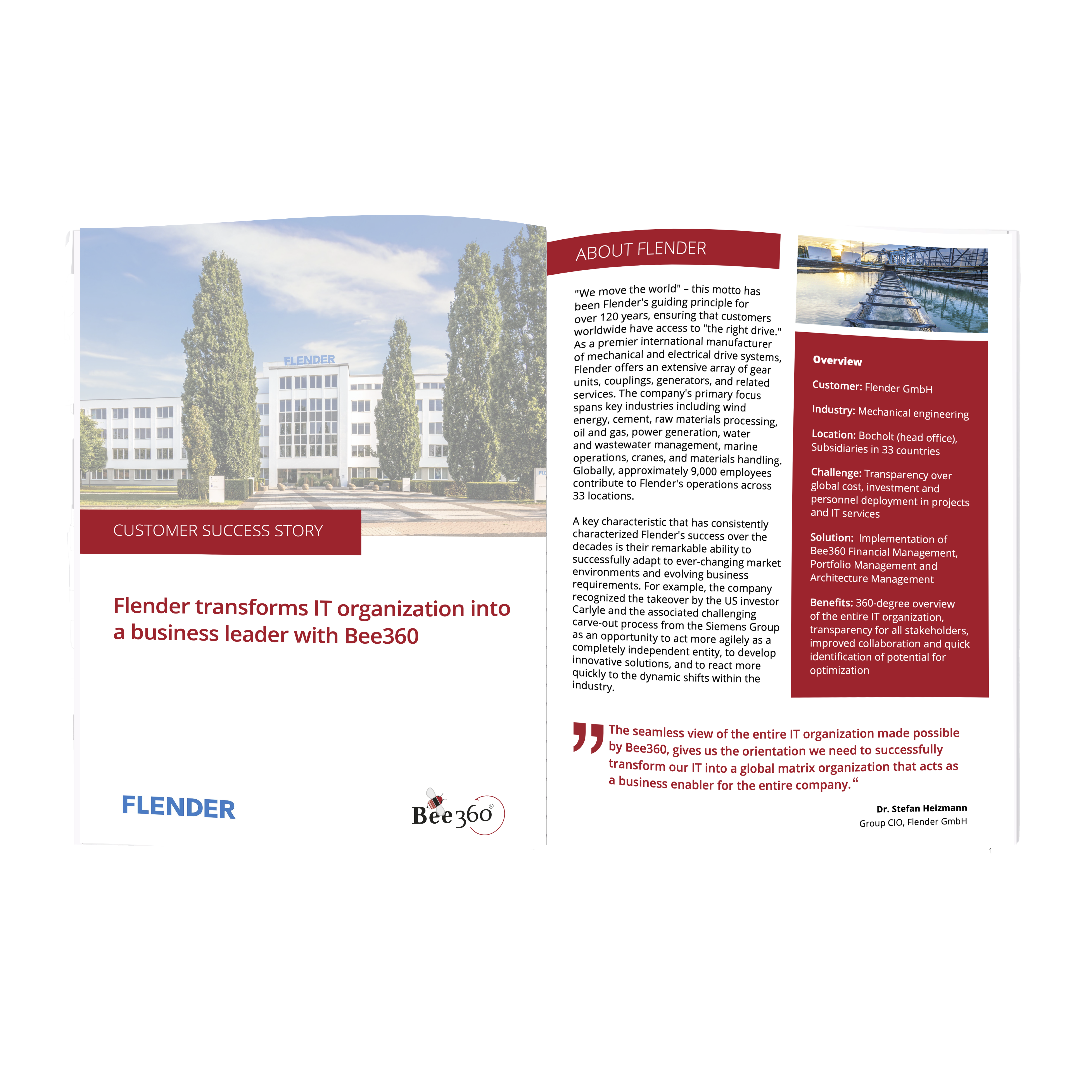
Flender transforms its IT organization into a business enabler with Bee360
See how Flender transformed its portfolio management with Bee360
Read Case Study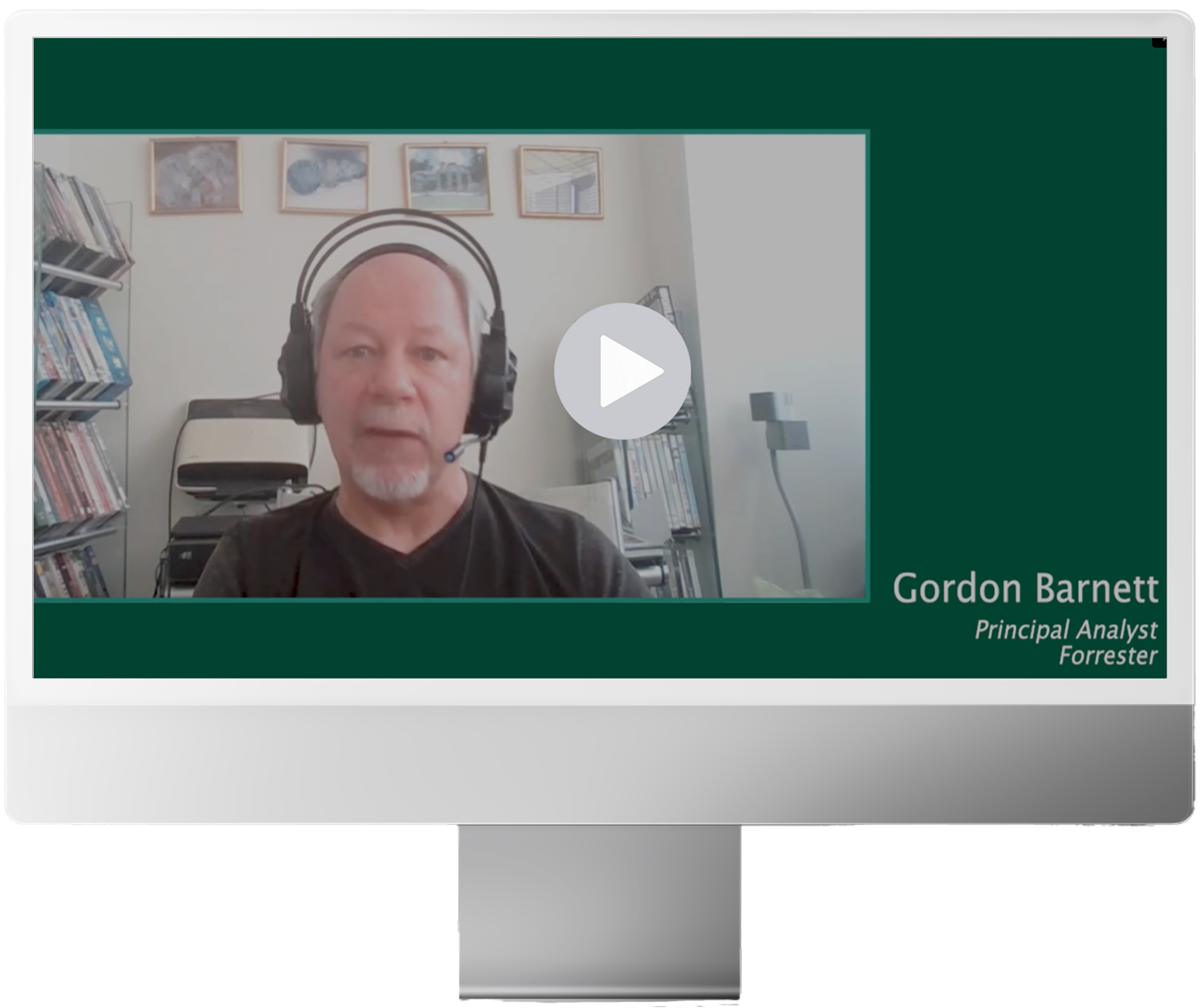
Expert insights on Strategic Portfolio Management trends
Forrester Principal Analyst Gordon Barnett shares key SPM perspectives
Watch NowExplore our integrated platform
Bee360 connects Strategic Portfolio Management, IT Financial Management, and Enterprise Architecture Management in one unified solution.
IT Financial Management
Control costs, demonstrate value contributions, and manage IT spending effectively.
Learn moreEnterprise Architecture Management
Strengthen IT integration with specialized departments and develop EAM as a valuable business enabler.
Learn moreHave Questions? Get in Touch With Us.
Grab 15 minutes with our team for straight answers to your questions.
Just 15 minutes
Fast answers
Ask us anything about Bee360
No commitment required
Frequently Asked Questions
Because annual plans no longer survive the year. According to Gartner, 64 percent of strategy leaders say at least half of their business plans had to change after annual planning, and only 29 percent believe their organization changes plans fast enough to respond to disruption. Only 16 percent of organizations are effective in resource capacity planning, and IT projects on average exceed their budgets by 45 percent.
Not by abolishing annual planning, but by adding rolling refinement to it. The annual plan sets budget frames for initiatives; short-term planning adjusts within them. The path is built in small steps:
Bottlenecks only become visible when demand and supply are seen together, across run and change and across departments. Bee360 combines capacity planning for services, projects and continuous improvements with the employees' own self-planning, so conflicts appear per person, team or skill before execution starts, not when deadlines are missed.
Overload is rarely a lack of effort; it is a lack of focus. Too many demands meet too little capacity, everything becomes important, the CIO feels unable to say no, and employees switch between tasks until a culture of heroism, demotivation and burnout sets in.
Resource planning without the portfolio tells you who is busy, but not with what value. A portfolio without capacity data produces wish lists. Integration makes both meaningful: demands are evaluated only when there is realistic capacity to execute them, internal capacity is valued at real costs, and the run capacity needed for each application and service is known.
Good prioritization starts with an honest view of capacity. Bee360 shows how much capacity remains for new demands once strategic commitments and stable operations are covered. This way, IT only evaluates demands that can actually be executed, instead of spending effort on demands that never will be.
Yes, and Bee360 steers them differently on purpose. Run the business has high planning certainty: it can be planned down to employee level, the steering focus is cost efficiency, and control happens decentrally against the annual budget. Change the business has high uncertainty: decisions are taken at portfolio level, and short planning cycles allow budgets and priorities to adapt.